
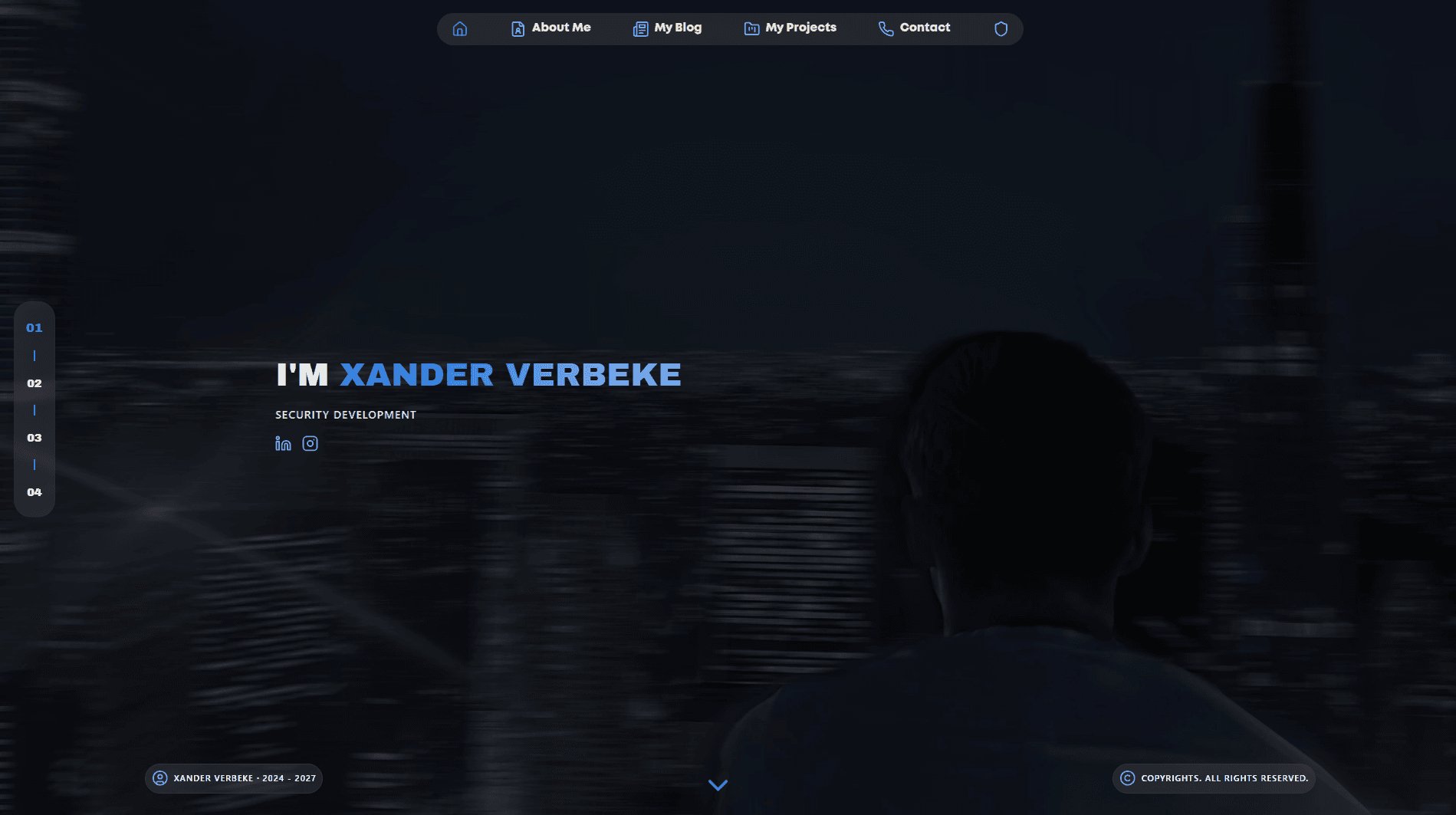
This portfolio website was built as a custom Next.js project rather than with a CMS. I chose that approach because it gives me full control over the structure, styling, content flow and technical setup of the site.
The frontend and overall website experience were developed with Next.js, which allowed me to combine performance, flexible routing and a modern React-based workflow. That made it easier to build a portfolio that feels personal and technically aligned with the kind of work I want to show.
For deployment, the website is hosted on Vercel and connected to GitHub. That setup makes publishing updates straightforward: changes can be managed in the codebase, versioned through GitHub and then deployed through Vercel in a clean and efficient workflow.
The domain name for the website was registered through Vimexx. This completed the project by giving the portfolio its own public identity instead of leaving it on a default hosting URL.
One of the main reasons for choosing a custom approach is that it keeps the portfolio technically consistent and easier to evolve. Instead of depending on a generic page builder, I can manage the content structure, layout and functionality directly in the project itself. That means projects, blog posts, categories and supporting content can be shaped in a way that matches my own profile and not just the constraints of a template.
This also makes the website a project in itself. It is not only a place where I present work, but also a practical example of how I approach development. The choices behind the site reflect what I value technically: clear structure, maintainability, performance, flexibility and control over the end result. In that sense, the portfolio is both a presentation platform and a demonstration of how I build digital products.
Another practical advantage is the workflow around deployment and updates. Because the code is maintained in GitHub and deployed through Vercel, changes can be tracked clearly and published efficiently. That creates a professional development flow in which the site remains easy to expand over time while still staying manageable as more projects and blog posts are added.
Overall, the site is the result of a custom development approach using Next.js, GitHub, Vercel and a separately registered domain through Vimexx. That setup reflects not only the final visual portfolio, but also the practical technical decisions behind how it was built, maintained and published.